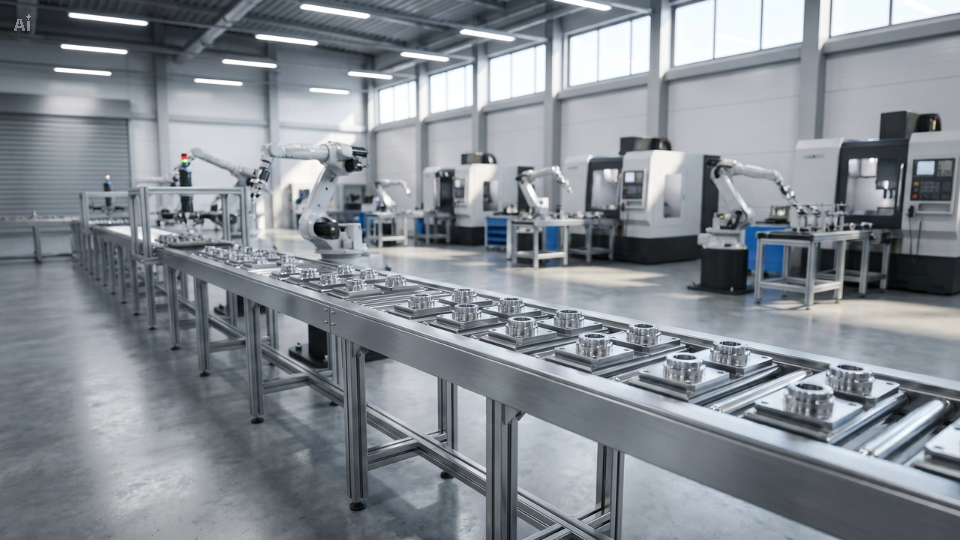
In the fast-paced world of manufacturing, the way materials move through your facility can either be a major bottleneck or a significant competitive advantage. A well-designed conveyor system is the backbone of any automated production line, directly impacting speed, safety, and operational costs.
Whether you are upgrading an existing facility or setting up a new plant in Malaysia, selecting the right conveyor technology is a critical decision.
1. Identify Your Material Characteristics
The first step in selection is understanding exactly what you are moving.
- Weight and Size: Heavy automotive parts require robust roller conveyors, while lightweight electronic components might be better suited for belt or friction-driven systems.
- Material Type: Are you handling abrasive raw materials, delicate food products, or oily machine parts? The material of the conveyor itself (PVC, stainless steel, or rubber) must be compatible with your product to prevent damage or contamination.
2. Common Types of Industrial Conveyors
- Belt Conveyors: The most versatile option, ideal for moving items across long distances and handling various shapes and sizes.
- Roller Conveyors (Gravity or Powered): Best for heavy boxes, pallets, or rigid items. Powered rollers allow for precise control and accumulation.
- Modular Plastic Conveyors: Highly durable and easy to clean, making them perfect for food processing or pharmaceutical clean rooms.
- Overhead Conveyors: Excellent for saving floor space, often used in painting or assembly lines where parts need to be suspended.
3. Consider Your Factory Layout
Space is a premium in any industrial environment. Modern conveyor systems should be designed to maximize your “footprint efficiency.” This includes:
- Incline/Decline Needs: Can the system move products between different levels?
- Integration: How will the conveyor interface with your existing automation, robotic arms, or packing machines?
- Scalability: Choose a modular design that allows for easy expansion as your production volume grows.
4. Safety and Maintenance
In Malaysia, adherence to safety standards is paramount. A high-quality system should include:
- Emergency Stop Mechanisms: Easily accessible along the entire line.
- Ease of Maintenance: Quick-release belts and self-lubricating rollers can drastically reduce downtime and long-term labor costs.
Conclusion: Custom Solutions for Maximum ROI
There is no “one-size-fits-all” when it comes to material handling. The most efficient systems are those designed specifically for the unique workflows of your factory.
At SEIBUTEC, we specialize in designing and installing custom conveyor systems and automation solutions that streamline your operations and drive profitability.