
For industrial manufacturing plants looking to scale, transitioning from manual labor to advanced automation is no longer a matter of “if,” but “when.” However, integrating robotic arms, automated conveyors, and smart sorting cells requires capital expenditure. The most critical metric for any business owner or financial director before signing off on a project is the Return on Investment (ROI).
Understanding how to accurately calculate the payback period of a robotic system allows you to treat automation as a predictable engine for financial growth rather than an unpredictable expense.
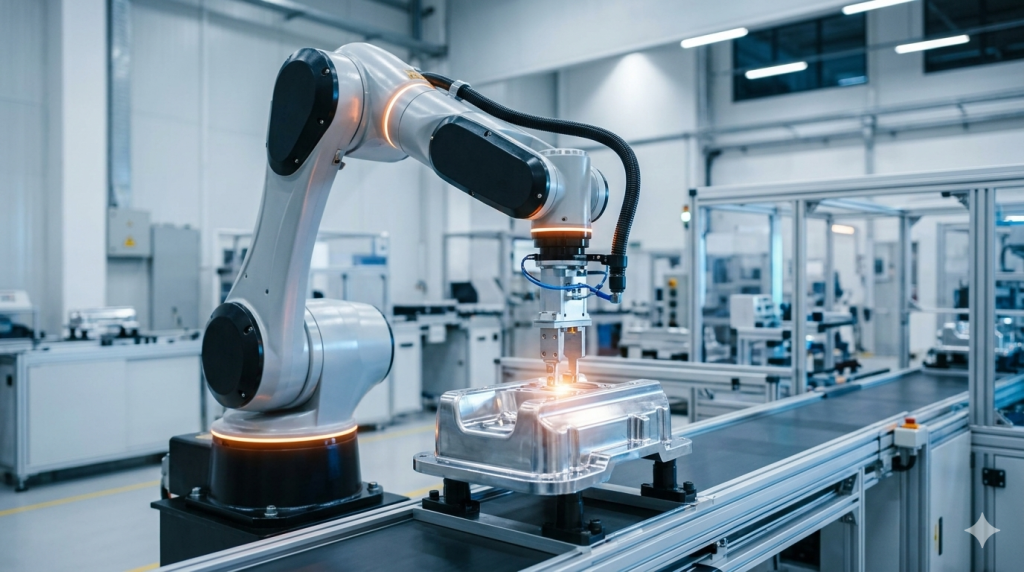
1. The Core Payback Formula: Moving Beyond Direct Labor
The most common mistake when evaluating a robotic system’s ROI is only calculating saved wages. While reducing reliance on manual labor is a significant factor, a true industrial ROI calculation must account for total operational efficiency gains:
ROI =
Financial Gains from Automation – Cost of Investment
Cost of Investment
× 100
To break down the Financial Gains, look closely at these three compounding pillars:
- Throughput Multipliers: Unlike manual shifts, a robotic system operates continuously at a fixed, optimized speed without breaks, fatigue, or shift changeovers. This drastically increases your daily output.
- Scrap and Defect Reduction: Precision robotic arms execute tasks with repeatable tolerances down to fractions of a millimeter. Minimizing rejected parts and material waste directly protects your bottom line.
- Uptime Reliability: Scheduled machine maintenance is highly predictable compared to human absenteeism or unpredictable labor shortages.
2. What is a Realistic Payback Timeline?
In the Malaysian manufacturing landscape, the typical payback timeline for standard industrial robotic integration ranges between 12 to 24 months.
- High-Speed Pick-and-Place: Simple packaging or sorting systems handling high volumes often achieve full payback closest to the 12-month mark due to immediate labor re-allocation and speed increases.
- Heavy-Duty Welding & Assembly: Complex multi-axis welding robots or custom structural fabrication machinery might carry a slightly higher initial design cost but pay for themselves rapidly through flawless quality consistency and reduced re-work expenses.